Training Modalities for Functional Fitness | Find What Fits Your Lifestyle

In today’s fast-paced world, functional fitness has gained popularity for its practical approach to training. Unlike traditional gym routines, functional fitness prepares you for real-life activities by enhancing strength, balance, and mobility. But with so many training modalities available, how do you know which one suits your lifestyle? In this guide, we’ll explore various functional fitness training modalities, helping you discover the best fit for your goals and daily routine.
What Are Functional Fitness Training Modalities?
There are different training methods and techniques in functional fitness that are used for your body movements and fitness goals. The focus of functional fitness is that it gives you a safe passage to carry out your tasks safely and easily. Let’s break it down into simple terms:
Functional Fitness Training Modalities Explained:
These are basically those exercises that help improve your natural movements and practical strength. Every modality has its own focus, and you choose them according to your fitness level and lifestyle.
1. Bodyweight Training:
In this modality, you use your weight for resistance. The examples of these exercises are Push-ups, Squats, and Planks.
You use your body as a tool without the gym equipment, like picking up the weight of a backpack with books.
2. Weight Training:
In this dumbbells, barbells, and kettlebells are used. This modality is used to make your muscles stronger and improve your balance.
For Example: Picking and carrying grocery bags is a functional movement that improves with weight training practice.
3. Plyometric Training:
This modality focuses on explosive movements, like jumping squats or box jumps. This increases your speed and power.
Imagine you are a basketball player and you have to jump quickly and with force that is why this training is very important.
4. Circuit Training:
This is the combination of different exercises, which are done in a sequence, without taking a rest. This improves stamina and overall fitness.
For Example: When there is a need for squats and then planks after a workout of push-ups, then this is the example of circuit training.
5. Mobility and Flexibility Training:
This modality works on your body’s range of motions and joint flexibility. Yoga and stretching are some of its examples.
Imagine you wear a seatbelt and reach your hand to back without any difficulty, flexibility training makes this easy.
6. Cardio Training:
Cardiovascular exercises like running, cycling, and swimming are very important for your heart health and stamina.
For Example: Climbing the stairs quickly or running are examples of natural cardio movements, which are improved by cardio training.
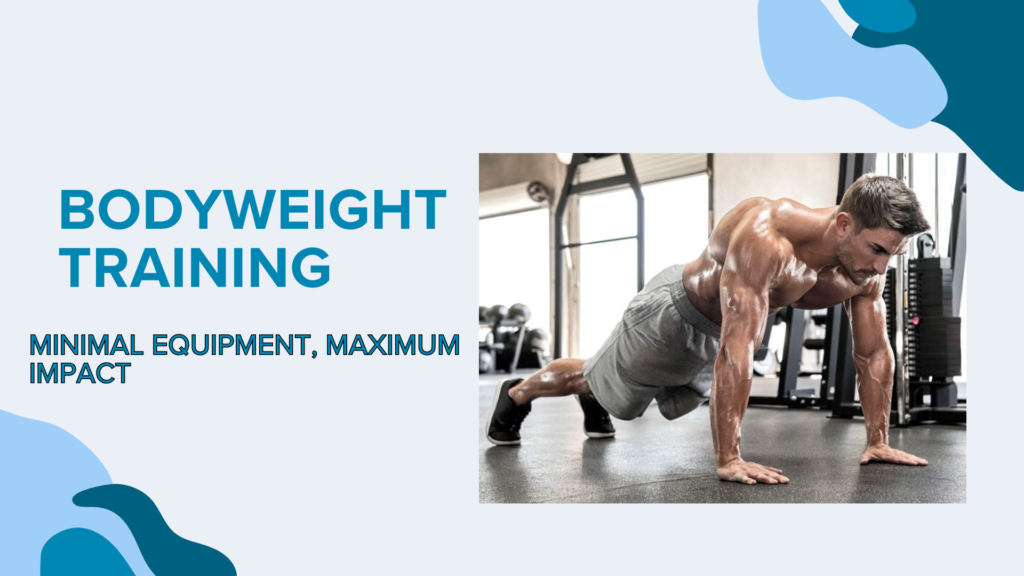
Bodyweight Training: Minimal Equipment, Maximum Impact:
The meaning of this is that you work out using your body weight, without the gym equipment. This is a simple and effective way to improve fitness, which is perfect for beginners. For this you only need is, your body and space. Let us understand this more easily.
What is Bodyweight Training?
Bodyweight training is those exercises in which you use your own body weight for the resistance. In this, you do not need dumbbells and or machines. Push-ups, Squats, Lunges, and Planks are common examples of this.
You need to have control of your own body to walk on a balance beam. Just like this in bodyweight training, you need to control your weight and then get stronger.
Why Is It Effective?
- No Equipment Needed: You can do this at home, park, or anywhere. Only your body is used.
- Improves Core Strength: These exercises strengthen your core (which is important for your balance and stability).
- Functional Movements: These are naturally occurring movements you do in daily life, such as getting up and sitting down.
How Does This Work?
Bodyweight training challenges your muscles because you try to pick, push, or balance your weight.
For Example: When you perform squats, you make your legs and core muscles stronger, which helps you in climbing the stairs and running.
Benefits of Bodyweight Training:
- Affordable: No need to pay gym fees, it’s totally free!
- Customizable: Beginners start with small reps (repetitions), and advanced people do more reps.
- Full-Body Workout: It can train your whole body in one exercise routine.
Resistance Training: Build Strength for Everyday Life:
Resistance means “obstruction.” In this training, you make your muscles perform the tasks of pulling and pushing some resistance. These resistances can be your body weight, dumbbells, resistance bands, or machines.
Think about when you push open a heavy door or lift grocery bags, it’s all about working against resistance. Resistance training makes this even better and easier.
How Does This Work?
When you perform tasks with your muscles against resistance, then their fibers are broken down. These fibers are then repaired through rest and get stronger even more. This process is called muscle strengthening.
For Example: when you perform squats, your legs and glutes muscles get stronger, which helps you climb the stairs and pick up heavy luggage.
Types of Resistance Training:
- Bodyweight Training: Use your own weight (like push-ups, and planks).
- Free Weights: Use dumbbells and barbells.
- Resistance Bands: Flexible bands that create resistance to your movement.
- Weight Machines: Use the machines in the gym to target specific muscles.
Why Is Resistance Training Important for Everyday Life?
- Muscle Strength: It makes you physically strong, which makes everyday tasks (like lifting items or moving furniture) easier.
- Bone Health: It strengthens bones and prevents osteoporosis.
- Better Balance: Your stability and balance are improved, which reduces the risk of falling.
- Functional Movements: This training prepares your body for natural movements, like bending, lifting, and twisting.
Beginner Tips for Resistance Training:
- Start with light weights or resistance bands.
- Keep each movement slow and under control, speed is not necessary.
- Rest so muscles can recover.
- Consistency is important, a little daily exercise is more useful.
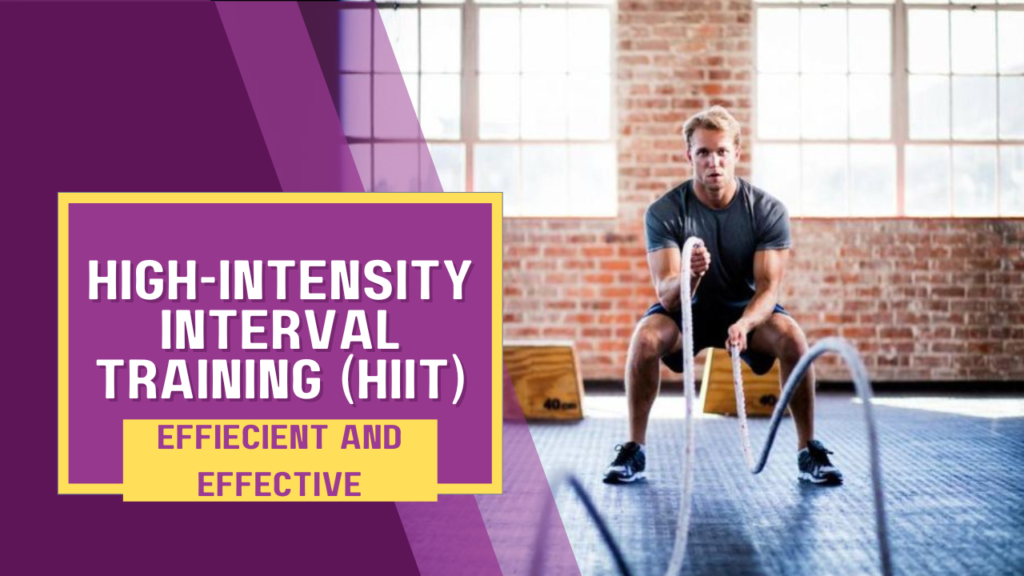
High-Intensity Interval Training (HIIT): Efficient and Effective:
The meaning of this is to take short breaks in intense workout sessions. This is a quick and powerful way to improve your fitness, which helps to save time and burns fat as well.
Understanding HIIT:
The concept of HIIT is simple:
- High-Intensity Phase: You exercise with all your energy for a short period of time, like sprinting for 30 seconds.
- Low-Intensity Phase: Then you rest or do light activity, like walking for 30 seconds.
You repeat this cycle for 15-20 minutes.
Imagine you are in a race in which you run quickly and for some time you run slowly to recover energy.
How Does HIIT Work?
When you exercise at high intensity, then your heart rate increases quickly and the body burns calories quickly. Rest breaks give you the time to recover, but your metabolism remains fast. Because of this combination, you perform a workout in a short time.
Benefits of HIIT:
- Time-Saving: 15-20 minutes of HIIT can be equivalent to a full workout.
- Calorie Burn: This workout burns calories not only during exercise but also after it (after-burn effect).
- Heart Health: It makes your cardiovascular system strong, which is beneficial for the heart and lungs.
- Flexible: You can do HIIT with any exercise, running, cycling, and bodyweight exercises.
What is the HIIT routine like?
1. Warm-Up (2-3 minutes): Do light jogging or stretching to prepare your body.
2. High-Intensity Exercise (30-40 seconds): Like sprinting, burpees, or jump squats.
3. Low-Intensity Rest (20-30 seconds): Light walk or take deep breaths.
4. Repeat Cycle (6-8 rounds): This will last for a total of 15-20 minutes.
5. Cool Down (3-5 minutes): Do stretching or slow walking to normalize your heart rate.
Yoga and Pilates: Flexibility Meets Core Strength:
This a combination of exercises that makes your body flexible and also makes your core muscles stronger as well. These both techniques focus on the body and the balance of the mind together, which is the perfect mix for fitness and relaxation.
Understanding Yoga:
Yoga is an ancient practice that works to sync your body, mind, and breathing. In this, you have to perform different postures that stretch and strengthen your body and also improve relaxation and mindfulness.
Think of yoga as a rubber band. When you stretch it (do poses), it becomes more flexible, but it doesn’t break.
Understanding Pilates:
Pilates is a modern exercise system that focuses on the core strength. It strengthens and stabilizes your muscles, especially your back and abs, through small and controlled movements.
Think of Pilates as a process of building a strong foundation. Just like a house needs a solid base, Pilates keeps your body stable and balanced.
Combination of Benefits of Both:
- Flexibility Improves: Yoga’s stretching poses make your muscles and joints more flexible, which smooths your body movements.
- Core Strength Improves: Pilates focuses on strengthening the core muscles, which is essential for better posture and stability.
- Stress Reduces: Yoga improves your breathing and relaxation techniques, which reduce stress and anxiety.
- Balance and Coordination: Both practices improve your balance and body control.
How to do Yoga and Pilates?
Basic Poses of Yoga:
1. Downward Dog: A pose to stretch the body.
2. Child’s Pose: A simple way of relaxation and stretching.
Basic Movements of Pilates:
1. Plank: To strengthen the core muscles.
2. Leg Lifts: To improve lower abs and hip strength.
Cross-Training: Variety to Avoid Plateaus:
Cross-training consists of multiple training modalities, retaining workouts engaging and stopping overuse injuries.
- Key Movements: Swimming, cycling, weightlifting, and jogging.
- Ideal For: Fitness enthusiasts who experience range or athletes aiming for balanced overall performance.
Benefits:
1. Improves common fitness and flexibility.
2. Reduces boredom with the aid of blending up routines.
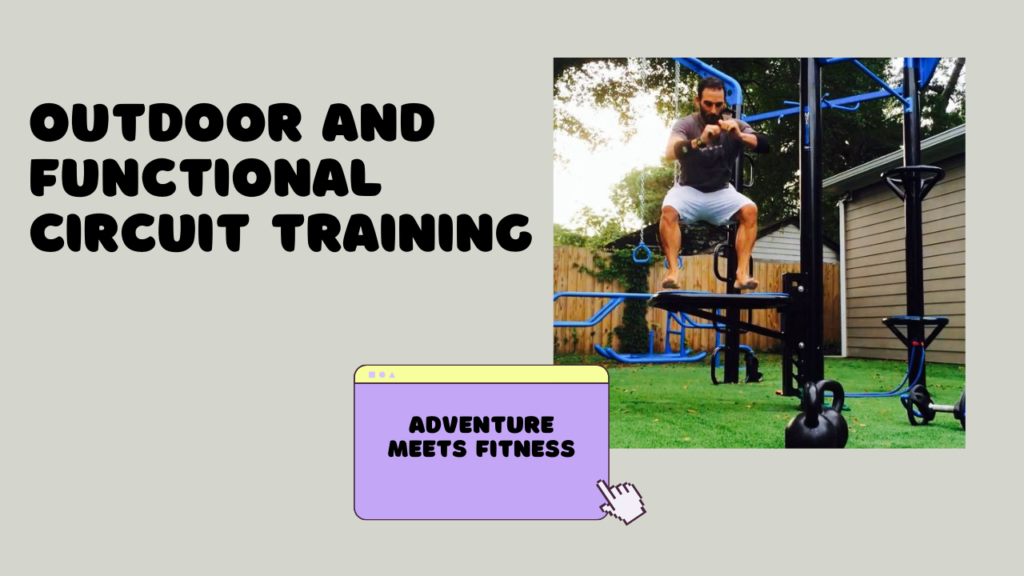
Outdoor and Functional Circuit Training: Adventure Meets Fitness:
For individuals who thrive outdoors or pick dynamic workouts, out-of-doors, and circuit education provide a fresh attitude on fitness.
- Key Movements: Tire flips, rope climbs, sled pushes, trail walking.
- Ideal For: Adventure seekers or folks that experience group challenges.
Benefits:
1. Builds practical electricity for unpredictable situations.
2. Boosts mental resilience and creativity.
- Pro Tip: Use natural elements like rocks or logs for added resistance during outdoor workouts.
How to Choose the Right Training Modality:
Selecting the proper training modality for useful fitness relies upon numerous elements:
- Your Goals: Are you trying to construct power, lose weight, or improve flexibility?
- Your Lifestyle: Consider your agenda, sources, and choices.
- Your Level: Start with newbie-pleasant sports and progress as you construct confidence.
Tips for Success:
1. Experiment with different modalities to find what you enjoy the most.
2. Adjust your routine based on your changing desires and lifestyle.
3. Stay consistent for benefits for a lengthy period.
Conclusion:
Functional fitness is all about improving your quality of life, and the right training modality can make all the difference. Whether you’re drawn to bodyweight exercises, resistance training, or yoga, there’s an approach that fits your lifestyle and helps you achieve your fitness goals.
So, what are you waiting for? Start exploring these training modalities today and experience the transformative power of functional fitness.